YouTube has officially taken the crown as the new leader of the U.S. media industry. What’s driving this shift isn’t just billions of daily views or creator payouts.
It’s the platform’s massive bet on artificial intelligence. YouTube is betting that AI will be the key to creating content in the future.
For years, YouTube has been the place where people uploaded everything from cat clips to full-length documentaries. Now it’s positioning itself not only as the center of internet culture but also as a direct competitor to traditional media giants like Disney.
The difference? Instead of billion dollar movie studios, YouTube is arming everyday creators with powerful AI tools that can edit, stylize, translate, and even generate video out of raw audio.
In this article, we’ll unpack how YouTube got here, what new AI tools it’s rolling out, how these tools are changing creator economics, the challenges that come with them, and where the entire media industry might go next.
Whether you’re a curious tech enthusiast or a creator looking to understand how to stay ahead, this is your roadmap.
YouTube’s Rise: From Amateur Videos to Media Giant
When YouTube launched in 2005, nobody imagined it would one day overtake Disney in U.S. media viewership. Yet here we are.
According to Reuters, YouTube now holds around 13.4 percent of U.S. TV viewership, compared to Disney’s 9.4 percent. That’s not a rounding error, it’s a historic tipping point.
Revenue has followed the eyeballs. YouTube pulled in more than 50 billion dollars last year from ads and subscriptions. And it’s been generous with creators: over the past four years, YouTube has paid out more than 100 billion dollars to them.
The numbers tell one story, but the real insight lies in how audiences consume content. Viewers no longer differentiate between “TV” and “online video.”
Short-form content like YouTube Shorts has become just as sticky as prime-time television, and long-form creators rival traditional studios in production value. This behavior shift created the opening for YouTube to not just coexist with Disney but surpass it.
The “Made on YouTube” Event: AI Takes Center Stage
At its annual “Made on YouTube” event, YouTube didn’t just trot out incremental updates. It unveiled a full suite of AI-powered tools designed to change the way content gets made.
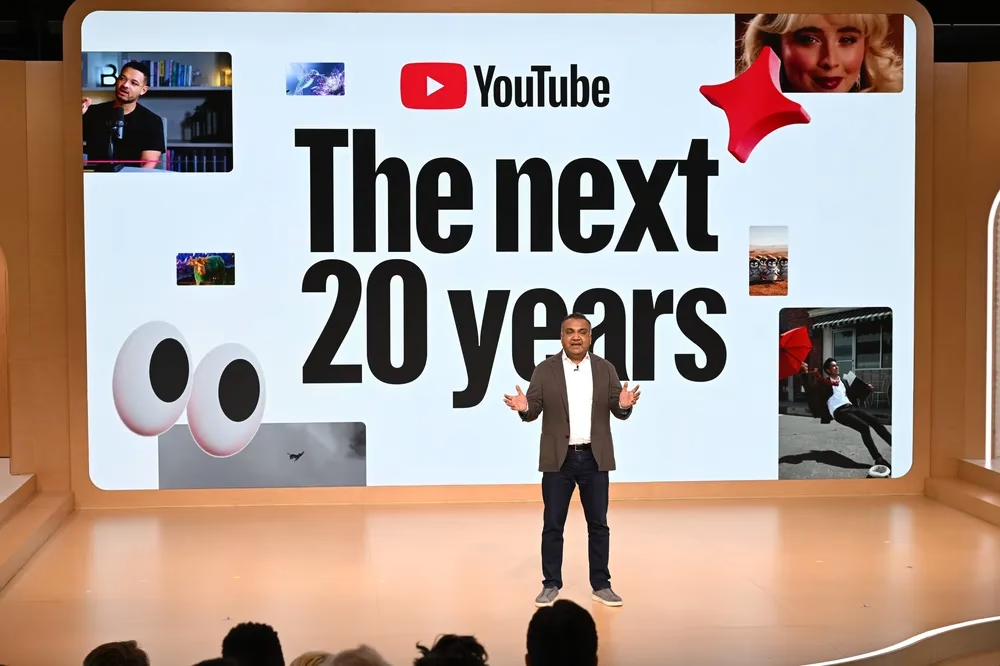
Highlights included:
- Veo 3 integration into Shorts: A generative video model that lets creators stylize clips, add motion overlays, or even generate visuals from audio inputs.
- Speech-to-song generator: Spoken words can be turned into melodies and sung performances that sync with visuals.
- AI auto-editing: Tools that assemble rough cuts of videos, speeding up one of the most tedious parts of the process.
- Auto-dubbing with lip sync: Creators can translate their content into new languages and have it appear as if they recorded it natively.
- Product link integration: Smart features that automatically detect when products appear and embed shopping links for monetization.
For podcasters, one of the most notable updates was the ability to transform audio content into video clips. This addresses one of YouTube’s biggest competitive battles: attracting audio-first creators who otherwise stick with platforms like Spotify.
How AI Tools Are Changing the Creator Process
Traditionally, producing high quality content required expensive cameras, sound engineers, and professional editors. AI flattens those barriers.
Imagine you’re a podcaster. With YouTube’s tools, you can upload your audio, generate a transcript, and instantly convert that transcript into video clips with visuals that fit your brand. Add auto generated subtitles, translations, and a background track. In a single afternoon, you’ve created what used to take a small team weeks.
For vloggers, AI auto editing means less time scrubbing through footage and more time refining storytelling. For musicians, speech-to-song opens doors for experimental tracks without expensive studio sessions. For international creators, auto dubbing makes global distribution achievable without a localization budget.
The unique twist here is accessibility. AI doesn’t just make workflows faster. It makes them possible for creators who otherwise wouldn’t have the resources.
YouTube’s Strategy vs Competitors
Every move YouTube makes is in response to pressure from competitors. TikTok set the standard for short form video. Spotify dominates audio. Netflix still holds ground in long-form premium shows.
YouTube’s edge is integration. Shorts compete directly with TikTok. Podcasts and audio visual tools chip away at Spotify. Full length videos keep Netflix on notice. Add AI tools on top, and YouTube is essentially telling creators: “You don’t need three platforms. Do it all here.”
Competitors aren’t standing still. Spotify is working on AI-powered translation for podcasts. TikTok experiments with generative effects. But none have Google’s AI infrastructure or YouTube’s massive creator economy to test, scale, and refine these tools.
Monetization and the Economics of AI Content
YouTube’s business model has always depended on keeping creators happy enough to stick around. AI doesn’t just help them make content, it helps them make money.
Brands now get AI assisted ad placement. Instead of manually cutting ads into different formats, AI picks whether a six-second vertical ad works best in Shorts or whether a thirty second horizontal one should run during long form content. That means more effective campaigns and higher payouts for creators.
Creators themselves benefit from the new product link integration. A beauty YouTuber showing off a makeup kit can now have those products linked automatically in the video description, creating instant monetization opportunities.
The economics shift is simple: AI reduces costs and increases monetization channels. The risk is that a flood of AI generated garbage content could lower overall ad rates if the platform becomes oversaturated. That’s why uniqueness and branding will matter more than ever.
Leadership and Creator Relations: Tool, Not Threat
Neal Mohan, YouTube’s CEO, has been clear: AI is here to support creators, not replace them. The company’s messaging is careful because it knows creators are wary. Nobody wants to be sidelined by a machine that can crank out unlimited content.
By positioning AI as an assistant, one that makes workflows faster and lowers technical barriers, YouTube is trying to strike a balance. It needs creators to trust the platform enough to adopt the tools without fearing they’re training their own replacements.
Risks and Challenges Ahead
No technological shift comes without problems. With AI content, several risks loom:
- Oversaturation: If everyone can produce five times as much content, discovery becomes a nightmare.
- Ethics: Deepfakes, fake news videos, and unauthorized likenesses could explode.
- Credit and compensation: Creators worry their work may be used to train models without fair rewards.
- Quality control: Floods of low-effort content could hurt audience trust.
YouTube will need stronger moderation and clearer labeling of AI-generated content to prevent its ecosystem from devolving into noise.
What This Means for the Media Industry
For traditional media companies like Disney, Netflix, or NBC, YouTube’s rise is more than competition, it’s disruption. Studios can’t match the sheer volume of content YouTube creators produce, and they can’t replicate the direct monetization incentives AI tools provide.
Expect hybrid models to emerge. Studios might collaborate with YouTubers or even license AI assisted creators to reach younger audiences. Just as streaming reshaped television, AI powered creator platforms will reshape media production.
Future Trends and Predictions
Here are some possibilities over the next five years:
- AI assisted virtual production that rivals Hollywood CGI.
- Global creators producing multi-language content instantly.
- Audiences demanding personalization, think videos tailored to your viewing habits in real time.
- Regulation and lawsuits over IP rights, especially around AI training datasets.
Creators who adapt early will benefit from the learning curve. Those who resist may find themselves drowned out by AI assisted competitors.
How Creators Should Prepare and Adapt
If you’re a creator, the first step is to learn these tools. Experiment with AI auto editing, dubbing, and product links. Even if you don’t use them heavily, knowing what they can do is an advantage.
Second, double down on your brand and storytelling. AI lowers technical barriers, which means originality and personality become even more important.
Third, think about distribution. With AI auto dubbing, your content isn’t limited to your home market anymore. A podcast in English can suddenly find an audience in Spanish, Hindi, or Japanese.
Quick Takeaways
- YouTube now leads U.S. media viewership, surpassing Disney.
- At its “Made on YouTube” event, it unveiled dozens of AI tools like Veo 3, speech-to-song, and auto dubbing.
- These tools make high quality production accessible to everyday creators.
- Monetization gets a boost with smarter ad placement and product links.
- Risks include oversaturation, deepfakes, and quality dilution.
- For creators, success will depend on branding, originality, and smart use of AI.
Youtube: An evolving platform
YouTube is no longer just a video-sharing platform. It’s the backbone of modern media, using AI to pull ahead of both digital and traditional competitors. With billions of users, billions in revenue, and billions in payouts, the scale is unmatched.
What AI brings is acceleration. Faster editing. Easier localization. More monetization options. But it also brings risks that require careful navigation. If you’re a creator, ignoring AI isn’t an option anymore. The question is how to adopt it without losing your unique voice.
For audiences, the coming years will mean more content than ever, more diverse, more accessible, and more personalized. For brands, smarter ad tools and better reach. For the media industry, an urgent need to rethink how stories are told and who gets to tell them.
We’re at the beginning of a new chapter. YouTube has bet big that AI is the future of content. All signs suggest it’s right.
FAQs
1. Will AI replace creators on YouTube?
No. YouTube stresses that AI is designed to support creators, not replace them. The focus is on making workflows easier and faster.
2. What are YouTube’s newest AI tools?
Key updates include Veo 3 for Shorts, speech-to-song generators, auto editing, auto dubbing with lip sync, and product link integration.
3. How will AI affect creator monetization?
AI optimizes ad formats, embeds product links, and reduces production costs, allowing creators to scale output and revenue.
4. What risks come with AI content?
Oversaturation, low quality spam, deepfakes, copyright disputes, and discovery challenges are the main concerns.
5. How can creators stay competitive?
Learn the tools, focus on brand identity, experiment with localization, and prioritize originality in storytelling.
Thanks for sticking with this deep dive. I’d love to hear your thoughts: which YouTube AI tool excites you most, and which one worries you? Drop a comment below, and if you found this useful, share it with your friends and fellow creators. The more voices in this conversation, the better we can shape the future of media.
- Reuters: YouTube, new leader of US media industry, bets on AI as key for creating content
- AI Business: What YouTube’s New AI Tools Mean for Content Creators
- U.S. Chamber: YouTube Exec on Giving Brands AI-Powered Tools
- Business Insider: YouTube has a new strategy to win over Spotify’s audio-first podcasters using AI
Discover more from Primetechhq
Subscribe to get the latest posts sent to your email.